
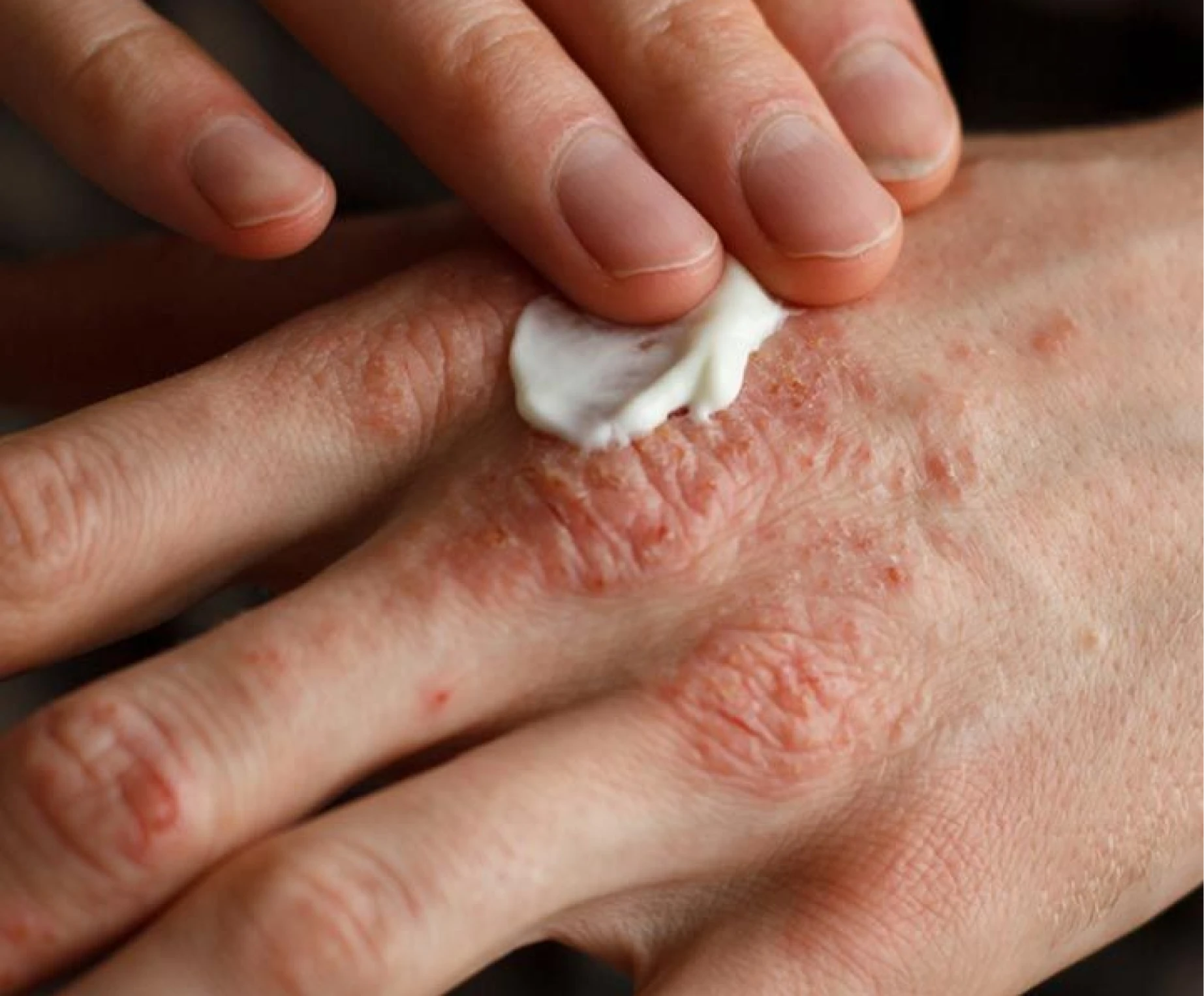
Psoriasis
Chronic scaly and itchy skin patches
Psoriasis is a chronic autoimmune condition that causes rapid skin cell buildup, leading to thick, silvery scales and red, inflamed patches. At Sattva Skin Clinic in Ankleshwar, Gujarat, Dr. Reema Kataria provides evidence-based treatment plans to control symptoms, reduce flare-ups, and improve quality of life.
Understanding Psoriasis
Psoriasis is an autoimmune condition where the immune system mistakenly attacks healthy skin cells, causing them to grow too quickly. Normal skin cells replace themselves every 28-30 days. In psoriasis, this happens every 3-4 days, leading to a buildup of cells on the skin's surface.
Common symptoms include:
- Thick, red patches of skin (plaques) covered with silvery-white scales
- Itching, burning, or soreness
- Dry, cracked skin that may bleed
- Thickened, pitted, or ridged nails
- Swollen and stiff joints (psoriatic arthritis)
Psoriasis is not contagious. It often runs in families and can be triggered by stress, infections, injuries, or certain medications.
Psoriasis affects both men and women equally, but certain patterns and triggers may vary based on skin type, hormones, and lifestyle factors. Men may develop thicker plaques due to naturally thicker skin, while women may experience flare-ups influenced by hormonal changes such as stress or menstrual cycles. Lifestyle habits like smoking, alcohol consumption, and stress levels can also affect severity differently. While the condition remains the same, its presentation and management may vary slightly for each individual.
How it may vary
(Men vs Women)
Diagnosis & Assessment
Physical examination
Assessing the appearance, location, and extent of skin plaques
Medical history review
Family history of psoriasis, previous infections, medications, and joint symptoms
Nail examination
Checking for pitting, thickening, or separation
Joint assessment
Evaluating for signs of psoriatic arthritis
Skin biopsy (if needed)
A small sample is taken to confirm diagnosis and rule out other conditions
Our Treatment Approach
Topical Treatments (Mild to Moderate Psoriasis)
Topical corticosteroids – Reduce inflammation and slow skin cell growth Vitamin D analogues – Slow skin cell growth (often combined with steroids) Topical retinoids – Reduce inflammation Calcineurin inhibitors – Steroid-free options for sensitive areas (face, genitals) Coal tar preparations – Reduce scaling, itching, and inflammation Salicylic acid – Helps remove scales
Phototherapy (Light Therapy)
Narrowband UVB therapy – Controlled exposure to UVB light slows skin cell growth PUVA (Psoralen + UVA) – Combines light-sensitizing medication with UVA light for severe cases Excimer laser – Targets only affected areas, sparing healthy skin
Systemic Medications (Moderate to Severe Psoriasis)
Oral medications – Methotrexate, cyclosporine, acitretin (require regular blood monitoring) Biologics – Advanced injectable medications that target specific parts of the immune system (e.g., adalimumab, etanercept, secukinumab)
Lifestyle & Trigger Management
Stress reduction techniques (stress is a major trigger) Avoiding skin injuries (cuts, scrapes, sunburns) Limiting alcohol consumption Maintaining a healthy weight (obesity worsens psoriasis) Smoking cessation (smoking triggers and worsens psoriasis)
When to Consult
a Dermatologist
You should seek medical care for psoriasis if:
- Over-the-counter or topical treatments are not providing relief
- Psoriasis is affecting your quality of life, sleep, or mental health
- You experience joint pain, swelling, or stiffness (possible psoriatic arthritis)
- You have widespread or severe plaques
- You notice signs of skin infection (increased redness, warmth, swelling, oozing, fever)
- You are interested in advanced treatments like phototherapy or biologics
- You experience sudden worsening or erythrodermic psoriasis (widespread redness and shedding) – seek immediate care
Prevention & Self-Care at Home
Moisturize daily – Thick creams and ointments reduce scaling and itching
Take lukewarm baths – Add colloidal oatmeal, Epsom salts, or dead sea salts to soothe skin
Use gentle, fragrance-free products – Avoid harsh soaps and detergents
Get moderate sunlight – Short, controlled sun exposure can improve psoriasis (avoid sunburn)
Manage stress – Stress is a major trigger; try meditation, yoga, or counseling
Maintain a healthy weight – Obesity worsens psoriasis and reduces treatment effectiveness
Limit alcohol – Alcohol can trigger flares and interfere with medications
Quit smoking – Smoking significantly worsens psoriasis and increases risk of psoriatic arthritis
Protect your skin – Avoid cuts, scrapes, and sunburns (Koebner phenomenon)

Understanding Psoriatic Arthritis
Up to 30% of people with psoriasis develop psoriatic arthritis (PsA) – a condition where the immune system attacks the joints as well as the skin. Symptoms of psoriatic arthritis include:
- Joint pain, stiffness, and swelling (especially in fingers, toes, wrists, knees, ankles, and lower back)
- Morning stiffness that improves with movement
- Swollen fingers or toes (sausage-like appearance)
- Pain where tendons and ligaments attach to bones (e.g., Achilles tendon)
- Nail changes (pitting, thickening, separation)
Important: Early diagnosis and treatment of psoriatic arthritis can prevent permanent joint damage. If you have psoriasis and experience joint pain, tell Dr. Reema Kataria immediately.
What to Expect
from Treatment
With consistent treatment, most patients at Sattva Skin Clinic in Ankleshwar, Gujarat experience: Within 2-4 weeks: Reduced scaling, itching, and plaque thickness with topical treatments Within 4-8 weeks: Significant clearance (50-75%) with phototherapy or systemic medications Biologics: Can achieve 90-100% skin clearance in many patients, with results visible within 3-4 months Psoriasis is a chronic condition with no permanent cure, but Dr. Reema Kataria will work with you to find the safest, most effective treatment plan for long-term control.
Psoriasis is a chronic skin condition that causes red, scaly patches on the skin. At Sattva Skin Clinic, Ankleshwar, Gujarat, Dr. Reema Kataria provides personalized treatment to control symptoms and improve skin health.
Psoriasis is caused by immune system changes and genetic factors. Environmental triggers can worsen symptoms. Dr. Reema Kataria evaluates each case at Sattva Skin Clinic.
Psoriasis is not contagious and cannot spread through contact. At Sattva Skin Clinic, Ankleshwar, Gujarat, proper treatment helps manage symptoms effectively.
Individuals with red patches, scaling, and itching should consult Dr. Reema Kataria. Early treatment helps control flare-ups.
Treatment may include medication, creams, and advanced therapies. Dr. Reema Kataria creates personalized treatment plans.
Treatment duration depends on severity. Some patients require long-term care.
Psoriasis may recur, but proper management reduces flare-ups.
Red patches, scaling, itching, and irritation.
Treatment at Sattva Skin Clinic, Ankleshwar, Gujarat is safe.
If symptoms persist, consult Dr. Reema Kataria.
Frequently asked questions
Have questions? Here are answers to help you understand the treatment better.
Eczema
Dry, itchy, inflamed skin treatment

Acne & Acne Scars
Pimples, blackheads, acne scars treatment

Pigmentary Disorders Treatment
Dark spots, uneven skin tone, pigmentation

Vitiligo
White patches on skin treatment

Keloid
Raised scars treatment

Lipoma Removal
Non-cancerous fatty lumps removal

Earlobe Repair
Torn or stretched earlobe correction
Nail Avulsion
Ingrown nail & nail infection treatment