
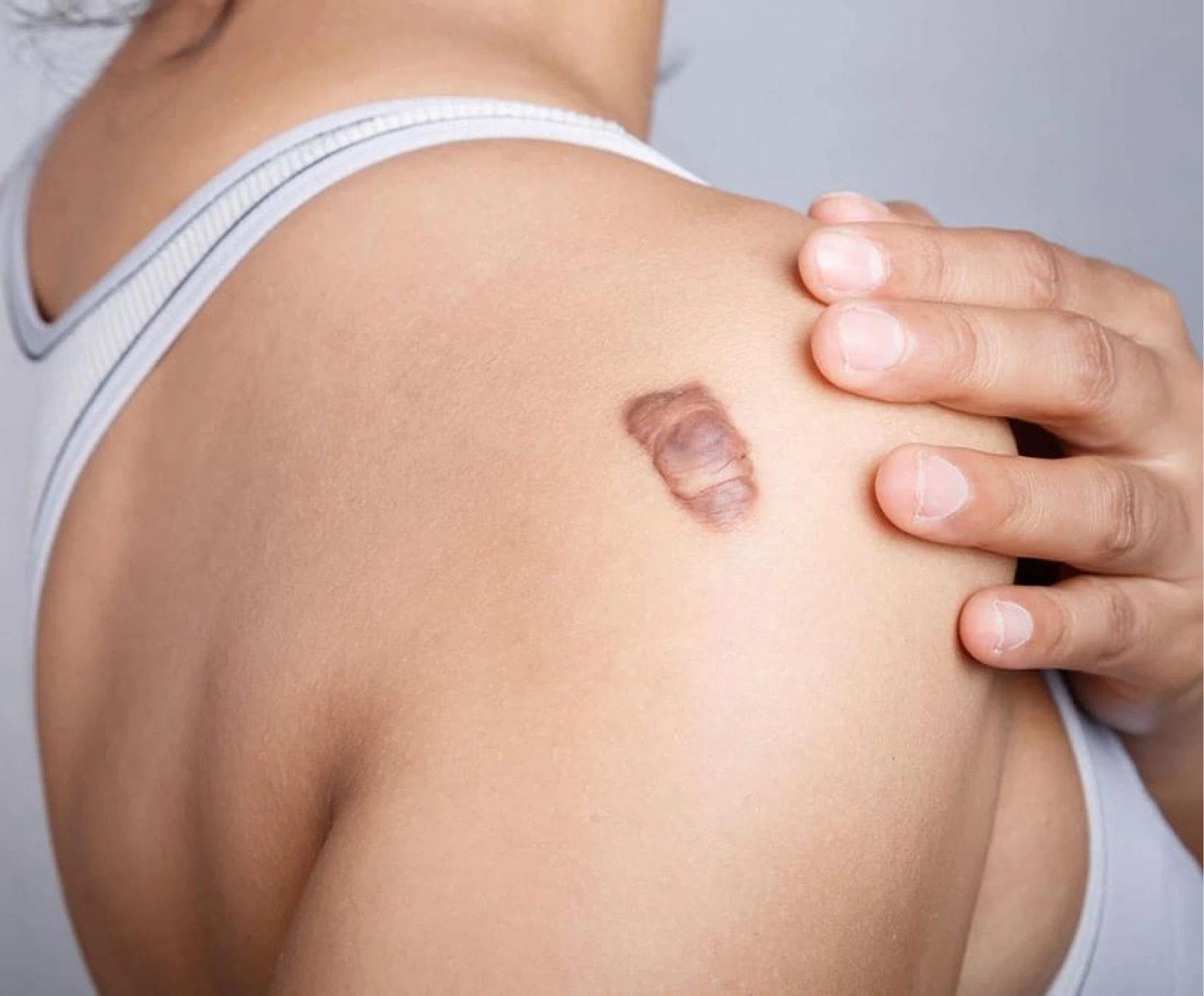
Keloid
Raised scars treatment
Keloids and hypertrophic scars are raised scars that form when the body produces too much collagen during wound healing. They can be itchy, painful, and emotionally distressing. At Sattva Skin Clinic in Ankleshwar, Gujarat, Dr. Reema Kataria offers advanced treatments to flatten, soften, and improve raised scars.
Understanding Keloid
Keloids form when the body produces excess collagen during wound healing, causing scar tissue to grow beyond the original injury site. While the exact reason why some people develop keloids and others don't is unknown, genetics play a major role – if a family member has keloids, you are more likely to develop them. People with darker skin tones (African, Asian, Hispanic, and Indian descent) are at higher risk. Any skin injury can trigger a keloid, including surgical incisions, ear piercings, acne (especially on chest and back), burns, cuts, tattoos, vaccination sites, and chickenpox scars. The most common locations for keloids are earlobes (from piercings), chest (breastbone area), shoulders, upper back, jawline, and upper arms.
Common symptoms include:
- Flattens raised scar tissue
- Reduces itch and discomfort
- Improves scar appearance
Keloids affect both men and women, but their location, triggers, and presentation may vary. Men are more likely to develop keloids on the chest, shoulders, jawline, and back, often due to acne, shaving irritation, or physical injuries. Women commonly develop keloids on the earlobes due to piercings and may also experience them following cosmetic procedures. Hormonal factors can influence scar formation in women, particularly during puberty or pregnancy. Due to thicker skin and higher collagen density, men may develop firmer and more prominent keloids, while women may notice changes earlier due to greater cosmetic awareness. Although the condition is similar in both, individual triggers and management approaches may vary.
How it may vary
(Men vs Women)
Diagnosis & Assessment
Physical examination
Assessing size, shape, color, and whether the scar extends beyond the original wound
Medical history review
Previous keloids, family history, skin type, cause of injury
Symptoms assessment
Itching, pain, tenderness, restriction of movement (if over joints)
Skin biopsy (if needed)
To rule out other skin growths (rarely needed)
Non-Surgical Treatments
Corticosteroid Injections (Most Effective)
What it is: Steroid (triamcinolone) injected directly into the keloid How it works: Reduces inflammation, stops collagen production, flattens the scar Frequency: Every 4-6 weeks Number of sessions: 3-5 sessions typically needed Results: Flattening visible after 2-3 sessions Side effects: Skin thinning, lightening of surrounding skin, pain during injection
Silicone Gel Sheets or Silicone Gel
What it is: Medical-grade silicone applied as a sheet or gel How it works: Hydrates and softens scar tissue Usage: Apply 12-24 hours per day for 3-6 months Best for: Newer keloids or as maintenance after injections Side effects: None (very safe)
Cryotherapy (Freezing)
What it is: Liquid nitrogen applied to freeze the keloid How it works: Destroys excess scar tissue Best for: Small, raised keloids Frequency: Every 3-4 weeks Side effects: Blistering, pain, skin lightening (may be permanent) Caution: Can cause a permanent white spot (hypopigmentation) – not recommended for darker skin tones without discussion
Laser Therapy
Pulsed Dye Laser (PDL): Reduces redness and itching, flattens scar Fractional Laser: Improves texture and softness Frequency: 3-6 sessions, 4-6 weeks apart Best for: Red, itchy keloids
Pressure Therapy
What it is: Special pressure garments or earrings How it works: Constant pressure prevents collagen buildup Usage: 24 hours per day for 6-12 months Best for: Earlobe keloids (pressure earrings), burn scars
Surgical Treatments
Surgical Excision
What it is: Keloid is surgically cut out Challenge: Keloids recur in 50-100% of cases after surgery alone Solution: Surgery must be followed by immediate post-op injections (steroids) and/or radiation
Protocol for Surgical Keloid Removal at Sattva Skin Clinic
Keloid is surgically excised Corticosteroid injection given immediately after closure Repeat injections every 4-6 weeks for 3-6 months Silicone sheets applied daily for 6 months Pressure therapy (if applicable) Success rate with combination: 80-90% recurrence prevention
Cryotherapy (Freezing)
What it is: Liquid nitrogen applied to freeze the keloid How it works: Destroys excess scar tissue Best for: Small, raised keloids Frequency: Every 3-4 weeks Side effects: Blistering, pain, skin lightening (may be permanent) Caution: Can cause a permanent white spot (hypopigmentation) – not recommended for darker skin tones without discussion
Radiation Therapy (for Resistant Keloids)
What it is: Low-dose radiation to prevent regrowth When used: After surgical excision for keloids that have recurred multiple times Timing: Within 24-48 hours after surgery Safety: Modern techniques are safe with minimal side effects
When to Consult
a Dermatologist
You should seek medical care for keloid if:
- A scar is growing beyond the original wound boundaries
- The scar is itchy, painful, or tender
- The scar is restricting movement (over joints)
- You have a personal or family history of keloids
- You want to prevent a keloid before planned surgery or piercing
- Previous treatments have failed and the scar is getting larger
Preventing Keloids
If you are prone to keloids or have a family history:
Avoid unnecessary piercings or tattoos – Especially on high-risk areas (ears, chest, shoulders)
Treat acne promptly – Acne on chest and back can turn into keloids
Protect skin from burns and cuts
After surgery, ask your surgeon about preventive measures:
Silicone sheets applied as soon as the wound heals
Steroid injections at the time of suture removal
Pressure garments if appropriate
Avoid shaving over keloid-prone areas – Use clippers instead
What to Expect
from Treatment
With consistent treatment, most patients at Sattva Skin Clinic in Ankleshwar, Gujarat experience: Corticosteroid Injections: After 1-2 sessions: Reduced itching and pain After 3-6 sessions: Significant flattening (50-80% reduction in height) Combination Therapy (Injections + Silicone + Laser): Best results for large or resistant keloids Flattening, softening, and color improvement over 6-12 months Surgery + Post-op Injections: Permanent removal possible in 80-90% of cases Requires 6-12 months of follow-up treatment
A keloid is a raised, thickened scar that develops due to excessive collagen production during wound healing. It may grow beyond the original injury area and appear firm or shiny. At Sattva Skin Clinic, Ankleshwar, Gujarat, Dr. Reema Kataria evaluates the keloid and recommends personalized treatment based on its size and location.
Keloids usually develop after skin injuries such as cuts, acne, burns, piercings, or surgical wounds. Some individuals are more prone due to genetic factors or skin type. Dr. Reema Kataria at Sattva Skin Clinic, Ankleshwar identifies the underlying cause and provides appropriate treatment to reduce scar growth.
Keloids are generally not harmful but may cause itching, discomfort, or cosmetic concerns. In some cases, they may grow larger over time. At Sattva Skin Clinic, Gujarat, Dr. Reema Kataria offers treatment to reduce size and improve skin appearance safely.
Anyone experiencing raised scars, itching, or thickened skin after injury should consult a dermatologist. Dr. Reema Kataria at Sattva Skin Clinic, Ankleshwar evaluates the condition and suggests treatment based on scar size, duration, and skin type.
Keloid treatment may include injections, laser therapy, medications, or minor procedures depending on severity. At Sattva Skin Clinic, Gujarat, Dr. Reema Kataria provides customized treatment plans to reduce scar size and improve skin texture gradually.
Most keloid treatments involve minimal discomfort and are well tolerated. Numbing techniques may be used for added comfort during procedures. Dr. Reema Kataria ensures safe and comfortable treatment at Sattva Skin Clinic, Ankleshwar.
The duration of keloid treatment depends on the size and severity of the scar. Some patients require multiple sessions for best results. At Sattva Skin Clinic, Gujarat, Dr. Reema Kataria monitors progress and adjusts treatment accordingly.
Keloids may recur in some cases, especially if the skin is prone to excessive scar formation. However, proper treatment and follow-up reduce recurrence risk. Dr. Reema Kataria at Sattva Skin Clinic, Ankleshwar provides long-term management guidance.
Keloids appear as raised, firm, and thick scars that may be itchy or uncomfortable. They may gradually increase in size over time. Early consultation with Dr. Reema Kataria at Sattva Skin Clinic, Gujarat helps prevent further growth.
If you notice a raised scar growing in size or causing discomfort, consult early. Dr. Reema Kataria at Sattva Skin Clinic, Ankleshwar provides proper diagnosis and treatment to improve skin appearance and reduce scar formation.
Frequently asked questions
Have questions? Here are answers to help you understand the treatment better.
Eczema
Dry, itchy, inflamed skin treatment
Psoriasis
Chronic scaly and itchy skin patches

Acne & Acne Scars
Pimples, blackheads, acne scars treatment

Pigmentary Disorders Treatment
Dark spots, uneven skin tone, pigmentation
Vitiligo
White patches on skin treatment
Lipoma Removal
Non-cancerous fatty lumps removal

Earlobe Repair
Torn or stretched earlobe correction
Nail Avulsion
Ingrown nail & nail infection treatment